Learning Center Learning Center

White Papers and Brochures

White Papers and Brochures

What are Unidirectional Carbon Fiber Fabrics?

What are Unidirectional Carbon Fiber Fabrics?

Unidirectional carbon fiber fabric is a type of carbon reinforcement that is non-woven and features all fibers running in a single, parallel direction. With this style of fabric, there are no gaps between fibers, and those fibers lay flat. There is no cross-section weave that divides the fiber strength in half with another direction. This allows for the concentrated density of fibers that provide maximum longitudinal tensile potential--greater than any other weave of fabric. For comparison, this is 3 times the longitudinal tensile strength of structural steel at one-fifth of the weight density.

What are Unidirectional Carbon Fiber Fabrics?

Unidirectional carbon fiber fabric is a type of carbon reinforcement that is non-woven and features all fibers running in a single, parallel direction. With this style of fabric, there are...

Learn More
What Are Prepregs?

What Are Prepregs?

"Prepreg" is the common term for a reinforcing fabric which has been pre-impregnated with a resin system. This resin system (typically epoxy) already includes the proper curing agent. As a result, the prepreg is ready to lay into the mold without the addition of any more resin. In order for the laminate to cure, it is necessary to use a combination of pressure and heat.

What Are Prepregs?

"Prepreg" is the common term for a reinforcing fabric which has been pre-impregnated with a resin system. This resin system (typically epoxy) already includes the proper curing agent. As a...

Learn More
Vacuum Bagging Equipment & Techniques for Room-Temp Applications

Vacuum Bagging Equipment & Techniques for Room-Temp Applications

Vacuum bagging is a technique employed to create mechanical pressure on a laminate during its cure cycle. Pressurizing a composite lamination serves several functions. First, it removes trapped air between layers. Second, it compacts the fiber layers for efficient force transmission among fiber bundles and prevents shifting of fiber orientation during cure. Third, it reduces humidity. Finally, and most important, the vacuum bagging technique optimizes the fiber-to-resin ratio in the composite part. These advantages have for years enabled aerospace and racing industries to maximize the physical properties of advanced composite materials such as carbon, aramid, and epoxy.

Vacuum Bagging Equipment & Techniques for Room-Temp Applications

Vacuum bagging is a technique employed to create mechanical pressure on a laminate during its cure cycle. Pressurizing a composite lamination serves several functions. First, it removes trapped air between...

Learn More
Using Glitterflake

Using Glitterflake

Fibre Glast Glitterflakes are .015" metallized polyesters flakes typically used with a clear gel coat. We recommend our #180 Clear Gel Coat which is an ISO/NPG marine gel coat with excellent weathering properties and a high gloss suitable for glitterflake.

Using Glitterflake

Fibre Glast Glitterflakes are .015" metallized polyesters flakes typically used with a clear gel coat. We recommend our #180 Clear Gel Coat which is an ISO/NPG marine gel coat with...

Learn More
Using Fairing and Filling Compounds

Using Fairing and Filling Compounds

Fairing and filling compounds are designed to repair and shape finished composite parts while retaining as much of the original piece strength as possible. The versatile compounds can be used for filling, adhering, building, shaping and finishing composites and other materials.

Using Fairing and Filling Compounds

Fairing and filling compounds are designed to repair and shape finished composite parts while retaining as much of the original piece strength as possible. The versatile compounds can be used...

Learn More
The Ultimate Fiberglass Repair Guide

The Ultimate Fiberglass Repair Guide

Composites offer numerous advantages over conventional building materials. One advantage that might not be obvious is the ease and durability of repairs. Because many lack the knowledge to repair composite parts and molds, damaged items are often replaced; for those that have a beginner's understanding, the process may seem intimidating at first. Fear not, composite parts are often easier to repair than parts made from traditional materials. In this article we will provide a basic understanding of composite repairs, as well as detailed steps and considerations to follow for both structural and cosmetic repairs.

The Ultimate Fiberglass Repair Guide

Composites offer numerous advantages over conventional building materials. One advantage that might not be obvious is the ease and durability of repairs. Because many lack the knowledge to repair composite...

Learn More

Videos

Videos

Charts

Charts

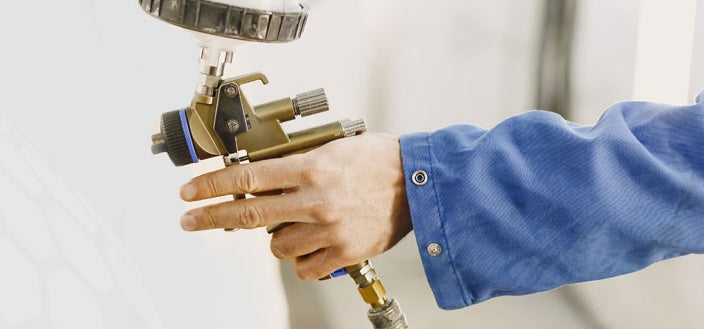
closeup of hand holding a sprayer

Lorem ipsum

Lorem ipsum dolor sit amet, consectetur adipiscing elit. Vivamus commodo feugiat nulla eu ornare. Vestibulum cursus risus in metus finibus pharetra. Curabitur fringilla, ex sed maximus mattis, leo est tempus justo, quis gravida lorem nisi sit amet purus. Duis sagittis cursus posuere. Class aptent taciti sociosqu ad litora torquent per conubia nostra, per inceptos himenaeos. Maecenas vel pellentesque justo. Vestibulum ante ipsum primis in faucibus orci luctus et ultrices posuere cubilia curae; Mauris efficitur est id rhoncus varius. Vivamus porta et ex ut commodo. In at ex cursus, dapibus nunc congue, gravida nibh. Nam id tincidunt ante.