Learning Center Learning Center
Nullam imperdiet nisi vel euismod egestas. Phasellus tristique sit amet tortor consequat luctus.
White Papers and Brochures
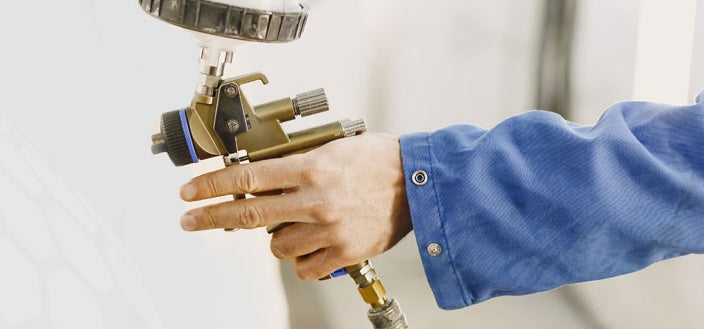
Gel Coat Application Guide
Gel coat is the most common surface coating used in the fabrication and repair of fiberglass reinforced products. Gel Coat is a specially formulated two-part polyester resin that is designed to be the first layer of resin applied in a mold when making a polyester or vinyl ester composite part. It is intended to create an opaque surface which will completely block glass pattern show-through. Polyester resins in general, and specifically gel coats, are naturally UV resistant, and properly cured parts can be submerged in water. Most boats are made using gel coat with polyester resin and fiberglass.
Gel Coat Application Guide
Gel coat is the most common surface coating used in the fabrication and repair of fiberglass reinforced products. Gel Coat is a specially formulated two-part polyester resin that is designed...
Carbon Fiber vs. Kevlar: Material Strength and Impact Resistance
Many engineers, designers, and buyers are often uncertain about the differences between carbon fiber and Kevlar in practical applications. This guide explains the science, strengths, and trade-offs of carbon fiber versus Kevlar, helping you make the best choice for your needs. Carbon Fiber vs Kevlar Materials? Before diving into performance, it’s important to understand what these materials are and how they’re made. What is Carbon Fiber? Carbon fiber is a lightweight, high-strength material made from thin strands of crystalline carbon atoms. It’s known for its exceptional stiffness, low weight, and high tensile strength. Typically used in aerospace, motorsports, and robotics, carbon fiber is ideal for applications where rigidity and weight savings are critical. From F1 car panels to drone frames, its structural efficiency is unmatched. Carbon Fiber Strength and Impact Resistance Carbon fiber offers superior tensile strength (3.5–6.0 GPa) and stiffness (Young’s Modulus up to 800 GPa), but is brittle under impact. It tends to crack or shatter when subjected to sudden force, making it less suitable for high-impact environments. What is Kevlar? Kevlar is a para-aramid synthetic fiber known for its toughness, flexibility, and abrasion resistance. It’s a staple in protective gear and industrial applications. Kevlar’s strength lies in its energy absorption and fracture resistance. It stretches under stress, dispersing energy rather than breaking, making it better for impact-prone applications. Kevlar Strength and Impact Resistance Kevlar has slightly lower tensile strength (3.0–3.6 GPa) than carbon fiber, but its impact resistance is significantly higher. It elongates up to 4% before breaking, allowing it to absorb and dissipate energy effectively. Kevlar vs Carbon Fiber: Material Properties and Performance Comparison Tensile Strength Carbon fiber typically offers higher tensile strength, ranging from 3.5 to 6.0 GPa. Kevlar is slightly lower, at 3.0 to 3.6 GPa, but still strong enough for most protective and industrial uses. Stiffness (Young’s Modulus) Carbon fiber is stiffer, with a modulus between 200 and 800 GPa. Kevlar is more flexible, ranging from 60 to 120 GPa. Elongation to Break Kevlar can stretch 2.5% to 4.0% before breaking. Carbon fiber only stretches about 1.5%, making it more prone to cracking under stress. Impact Resistance Kevlar effectively absorbs and disperses energy, making it ideal for high-impact applications. Carbon fiber is more prone to shattering. Density Kevlar is slightly lighter (1.44 g/cm³) than carbon fiber (1.6 g/cm³), which can be important in weight-sensitive designs. Thermal Resistance Kevlar begins to degrade above 500°C (932°F). Carbon fiber undergoes sublimation, transitioning directly from a solid to a gaseous state at high temperatures. The temperature at which this process begins is around 3,652 - 3,697°C (6,600 - 6,687°F). Abrasion Resistance Kevlar offers excellent abrasion resistance. Carbon fiber is moderate in this area. Cost Carbon fiber costs around $10–$20 per pound. Kevlar ranges from $15–$25 per pound. Carbon Fiber vs Kevlar Property Comparison Property Carbon Fiber Kevlar Tensile Strength 3.5 – 6.0 GPa 3.0 – 3.6 GPa Young’s Modulus 200 – 800 GPa 60 – 120 GPa Elongation to Break ~1.5% ~2.5 – 4.0% Impact Resistance Low Very High Density ~1.6 g/cm³ ~1.44 g/cm³ Thermal Resistance Sublimates >3652°C (6600°F) Degrades > 500°C (932°F) Abrasion Resistance Moderate Excellent Cost per lb (avg) $10–$20 $15–$25 How These Materials Behave Under Impact Carbon fiber is incredibly stiff and strong, but doesn’t handle impact well, as it tends to fracture or de-laminate when struck. On the other hand, Kevlar stretches and absorbs energy, making it far more reliable in high-impact scenarios like industrial safety gear or blast shields. Cost, Fabrication, and Practical Tradeoffs Carbon fiber is brittle and challenging to machine, while Kevlar is tough but difficult to cut or drill. Kevlar also degrades faster under UV and needs protective coatings. Carbon fiber is more stable in harsh environments but can be more expensive to repair. Kevlar may require more maintenance in exposed conditions, but its durability makes it a better long-term choice for rugged use. Common Applications: Where Each Material Excels Carbon Fiber in Automotive and Aerospace Used in F1 cars, supercars, and UAVs for its stiffness and low weight. Kevlar in Industrial and Safety Equipment It is used for safety helmets, reinforced pressure vessels and pipes due to its abrasion and impact resistance. Carbon Fiber in Drones and Robotics Provides rigidity and precision for lightweight, high-performance frames and components. Kevlar in Sports & Recreation Applications Used in kayaks and canoes and hockey sticks and tennis rackets where fatigue resistance and abrasion resistance are needed most. Use Cases and Preferred Material Industry/Application Material Rationale F1 Cars / Supercars Carbon High stiffness, low weight Canoes and Kayaks Kevlar Abrasion and impact resistant Drones / UAV Frames Carbon Stiff, lightweight, performance-driven Tactical Helmets Kevlar Flexible and impact-absorbing Robotics End Effectors Carbon Precise and weight-optimized Recommended Products for Your Project For Carbon Fiber Applications: Carbon Fiber Fabrics: Plain and Twill Weaves: Ideal for structural parts, panels, and lightweight builds. High Modulus Carbon Fiber Fabrics: Best for aerospace and precision applications. For Kevlar Applications: Kevlar® 49 Fabric: Excellent for abrasion resistance and reinforcement in high-wear environments. For Hybrid Needs: Carbon/Kevlar® Hybrid Twill Fabric: Combines stiffness and toughness in one fabric. Kevlar®/Carbon Hybrid Yellow Kit: Great for small builds or prototyping with visual appeal. Pros and Cons of Carbon Fiber vs Kevlar Recap Carbon Fiber: Lightweight and Rigid Pros: High tensile strength, ultra-light, extremely stiffCons: Brittle, expensive, poor in impact, and shear Kevlar: Tough and Impact-Resistant Pros: High energy absorption, durable, cut/abrasion resistantCons: Lower stiffness, UV degradation, harder to machine Hybrid Composites: Combining Strength and Toughness Hybrid composites combine carbon fiber’s stiffness with Kevlar’s toughness. Carbon is often used on the outside for rigidity, while Kevlar is layered inside to absorb impact. These hybrids are common in racing panels, aerospace skins, and high-performance equipment. Which Should You Choose? Carbon Fiber or Kevlar? Kevlar is a great choice if your projects require strong protection and energy absorption. Carbon Fiber is best for lightweight and structural needs. If you want the benefits of both, try a hybrid composite. When selecting between the two options, determine your performance requirements and choose the best material. Carbon Fiber vs Kevlar FAQ Is Carbon Fiber Stronger Than Kevlar? Yes, in tensile strength. But Kevlar is better at absorbing impact and resisting fracture. Why Isn’t Carbon Fiber Used in Protective Gear? It’s brittle and doesn’t absorb energy well, which is a must for protective applications. What Material Is More Durable Than Carbon Fiber? Kevlar, Dyneema, and hybrid aramids offer better toughness and abrasion resistance. What Fiber Is Stronger Than Kevlar? Dyneema, Zylon, and carbon nanotube fibers exceed Kevlar’s strength but have tradeoffs. What’s 10x Stronger Than Kevlar? Graphene and CNT-based materials may be, but they’re not yet practical at scale.Does Kevlar or Carbon Fiber Resist Compression Better? Carbon fiber performs better under compression. Kevlar excels in tension and impact. Are Hybrid Kevlar/Carbon Composites the Best of Both Worlds? Yes, especially in aerospace, motorsports, and high-performance equipment.
Carbon Fiber vs. Kevlar: Material Strength and Impact Resistance
Many engineers, designers, and buyers are often uncertain about the differences between carbon fiber and Kevlar in practical applications. This guide explains the science, strengths, and trade-offs of carbon fiber...
Using the Materials Calculator
Materials Calculator for Carbon Fiber, Fiberglass, Resin and more. Whether you're working with fiberglass, carbon fiber, or Kevlar, this calculator helps you determine how much material and resin you'll need based on the size and number of your parts. No more guesswork — just quick, accurate estimates that help you buy exactly what you need. It’s perfect for both beginners and seasoned professionals looking to save time and money on material planning. The Materials Calculator can be found here. INPUTS Step 1 - Enter Dimensions and Desired Thickness Start by inputting the basic measurements for your composite project: Length and Width – Enter the size of the part or mold you plan to fabricate. Desired Thickness – This determines how many layers of reinforcement you'll need. Tip: If you're not sure how thick your part should be, see below for help choosing layers and materials. Step 2 - Select Materials for Your Project Next, choose the reinforcement material you'd like to use from the drop-down menu, such as: Chopped Strand Mat Woven Fiberglass Carbon Fiber Kevlar® Not sure what to use?Consult our white paper: What Do I Need for My Composite Project? Adjusting Layers for Thickness If you know your desired thickness (e.g., 0.25"), you can increase the number of fabric layers to reach it. For example: Using 6 layers of Chopped Strand Mat will help achieve a thickness slightly over 0.25” which is ideal for mold building. Alternatively, if you already know the number of layers you want to use, the calculator will reverse-calculate the final part thickness. Note: Be sure to account for core material and coating thickness: Gel Coat / Surface Coat: Add ~0.020"–0.025" Core material: and 0.125”-2” depending on thickness you choose Paint / Clear Coat: Typically, negligible in thickness: 0.001-0.003” RESULTS On the right side of the calculator, you’ll find a summary showing: Estimated Final Thickness (excluding core and coatings) Total Fabric Required Fibre Glast sells fabrics in: Pre-packaged sizes: 1, 3, and 5 yards Cut-to-length: Starting at 10 yards Round up your order to ensure you have enough material, especially for odd shapes or layered builds. Estimate Resin RequirementsThe calculator also estimates how much resin you’ll need, based on: Formula: Resin weight = Fabric weight × 1.75This result is shown in pounds, matching how resins are sold at Fibre Glast. Be sure to check the product description for weight per unit: Example: A gallon of 78-A Polyester Resin weighs ~9 lbs. In Practice:If your project requires 6.429 lbs. of resin: 1 gallon (9 lbs.) covers it with margin If you’re skilled at hand lay-up and want less waste, 3 quarts (~6 lbs.) may suffice Print the results for future reference. Final Thoughts The Fibre Glast Materials Calculator is designed to make your project planning smarter and more efficient. With just a few inputs, you’ll know: How much fabric to order. What your final part thickness will be. How much resin is needed down to the pound. Head over to the calculator and plan your next lay-up with confidence: Try it now!
Using the Materials Calculator
Materials Calculator for Carbon Fiber, Fiberglass, Resin and more. Whether you're working with fiberglass, carbon fiber, or Kevlar, this calculator helps you determine how much material and resin you'll need...
Videos
Videos
Scion FR-S Tuner Challenge
2012 SEMA Show Congratulations to Chris Basseglia and R Miller Auto for taking 1st Place in the Scion FR-S Tuner Challenge with their Minty FReSh FR-S! Fibre Glast is a proud sponsor of this award-winning car! In August 2012, Scion chose three custom car builders and gave them each a 2013 Scion FR-S, a $15,000 build budget, and 90 days to build the best FR-S they could. The three finished cars were viewed by an independent car show judging company on October 31, 2012 in the Scion Booth at the SEMA Show in Las Vegas. Chris Basseglia's Minty FReSh FR-S went home with 1st Place and a $10,000 prize. View Chris Basseglia of Lebanon, PA talk about his Minty FReSh FR-S in this video. Fibre Glast as a Sponsor Fibre Glast supplied R Miller Auto with materials to create pieces in the custom-made body kit on Chris Basseglia's Scion FR-S. R Miller Auto was able to use a vacuum infusion technique to create unique body features. Here's a video of R Miller Auto using Fibre Glast materials in a Vacuum Infusion application. What is Vacuum Infusion? Vacuum Infusion is a fabrication technique that uses vacuum pressure to drive resin into a laminate while in the mold. Dry materials are laid into the mold and the vacuum pressure is applied before resin is introduced. Once a complete vacuum is achieved, resin is forced into the laminate via vacuum tubing. The vacuum infusion process offers a better fiber-to-resin ratio than hand lay-up or vacuum bagging. Fibre Glast Materials Used by R Miller Auto #251 Continuous Strand Mat #580-A Yellow Sealant Tape #582 Nylon Release Peel Ply #891-A Vacuum Connector #893 Vacuum Tubing #1093 Unidirectional E-Glass #1401 EnkaFusion Nylon Matting #1403 Spiral Tubing #1408 Lantor Soric XF #1688 Stretchlon 800 Bagging Film The Other Scion FR-S Tuner Challengers Carbon Stealth FR-S by John Toca of Chicago, IL. 2nd Place. FR-S GT by Daniel Song of Orange County, CA. 3rd Place
Scion FR-S Tuner Challenge
2012 SEMA Show Congratulations to Chris Basseglia and R Miller Auto for taking 1st Place in the Scion FR-S Tuner Challenge with their Minty FReSh FR-S! Fibre Glast is a...
R Miller Auto - Vacuum Infusion Using Fibre Glast Materials
In this video R Miller Autobody used Fibre Glast materials in a vacuum infusion application. Vacuum Infusion is a technique that uses vacuum pressure to drive resin into a laminate. Dry materials are laid into the mold and the vacuum pressure is applied before resin is introduced. Once a complete vacuum is achieved, resin is forced into the laminate via vacuum tubing. The vacuum infusion process offers a better fiber-to-resin ratio than hand lay-up or vacuum bagging.
R Miller Auto - Vacuum Infusion Using Fibre Glast Materials
In this video R Miller Autobody used Fibre Glast materials in a vacuum infusion application. Vacuum Infusion is a technique that uses vacuum pressure to drive resin into a laminate....
Resin Infusion and Sandwich Core
Fibre Glast offers a wide selection of Resin Infusion Supplies and Equipment as well as a large variety of Sandwich Core Materials for use in vacuum bagging or resin infusion applications. The vacuum bagging technique is used to improve the resin/reinforcement ratio of a composite laminate by applying vacuum pressure on a composite laminate during the cure cycle. This results in stronger, lighter parts.
Resin Infusion and Sandwich Core
Fibre Glast offers a wide selection of Resin Infusion Supplies and Equipment as well as a large variety of Sandwich Core Materials for use in vacuum bagging or resin infusion...
Charts
Charts
Lorem ipsum
Lorem ipsum dolor sit amet, consectetur adipiscing elit. Vivamus commodo feugiat nulla eu ornare. Vestibulum cursus risus in metus finibus pharetra. Curabitur fringilla, ex sed maximus mattis, leo est tempus justo, quis gravida lorem nisi sit amet purus. Duis sagittis cursus posuere. Class aptent taciti sociosqu ad litora torquent per conubia nostra, per inceptos himenaeos. Maecenas vel pellentesque justo. Vestibulum ante ipsum primis in faucibus orci luctus et ultrices posuere cubilia curae; Mauris efficitur est id rhoncus varius. Vivamus porta et ex ut commodo. In at ex cursus, dapibus nunc congue, gravida nibh. Nam id tincidunt ante.