Learning Center
 Materials Calculator
 Industries Served


Duratec® Clear Hi-Gloss Gel Coat Additive
Details
Details
What Is Duratec® Clear Hi-Gloss Gel Coat Additive?
Duratec® Clear Hi-Gloss Gel Coat Additive is a clear additive blended into gel coats to create a glossy, smooth finished surface.
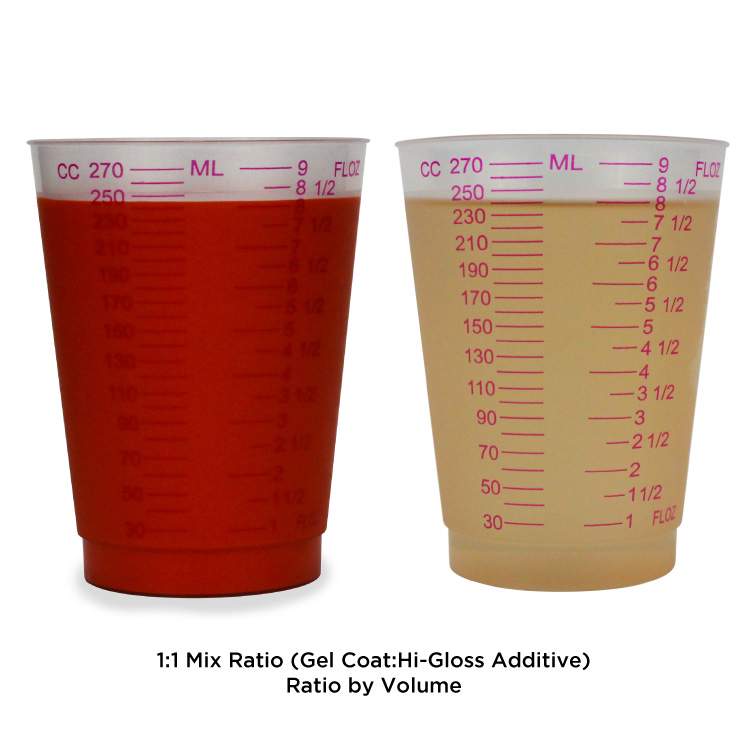
Mixed at a 1:1 ratio with regular gel coat, Duratec® Clear Hi-Gloss reduces viscosity and porosity, improves gloss level, and permits a complete open-air cure, which is the property that lets gel coat cure tack free where it is exposed to air during repairs.
Why Choose Duratec® Clear Hi-Gloss Gel Coat Additive?
Duratec® Clear Hi-Gloss Gel Coat Additive does two distinct jobs depending on the blend. At 1:1 with regular gel coat it improves gloss, lowers porosity, and enables open-air cure, making it ideal for repairs and top coating. At 15% with tooling gel coats it upgrades mold surfaces by improving gloss retention, increasing impact resistance, and reducing heat distortion.
In both cases the reduced viscosity lets gel coats spray controllably through siphon and HVLP equipment, cutting sanding and polishing time and yielding a low-porosity surface.
What Are the Best Applications for Duratec® Clear Hi-Gloss Gel Coat Additive?
Duratec® Clear Hi-Gloss Gel Coat Additive is best used at 1:1 with gel coat for high-gloss, low-porosity repairs and top coats that cure in open air, and at 15% with tooling gel coats to upgrade mold surfaces. It pairs throughout the line with the #683 white, #685 neutral, #188 tooling, and #710 color gel coats.
How Should Duratec® Clear Hi-Gloss Gel Coat Additive Be Used for Best Results?
Duratec® Clear Hi-Gloss Gel Coat Additive is blended 1:1 with regular gel coat or at 15% with tooling gel coat, then catalyzed at 2% MEKP. Spray through siphon or HVLP equipment, taking advantage of the lowered viscosity for better control and coverage. When making below-the-waterline repairs on boats, add #71 Styrene Wax to maximize hardness.
Technical Specifications
- Type: Clear high-gloss gel coat additive
- Blend ratios: 1:1 with regular gel coat; 15% with tooling gel coat
- Catalyzation: 2% MEKP
- Benefits: Lower viscosity and porosity, improved gloss, open-air cure; sprays through siphon and HVLP
- Note: Add #71 Styrene Wax for below-waterline boat repairs
Available Sizes and SKUs
- #1039-A — Quart
- #1039-B — Case of 6 quarts
- #1040-B — Gallon
- #1040-C — Case of 4 gallons
Quantity discounts available on cases of 4 gallons when 4 or more cases are ordered.
Every product FibreGlast sells is First Quality Guaranteed, so you can upgrade gloss and cure with confidence.
Shipping
Shipping
Sizes
Sizes
 WARNING: This product can expose you to chemicals including Styrene, which is known to the State of California to cause cancer. For more information go to www.P65Warnings.ca.gov