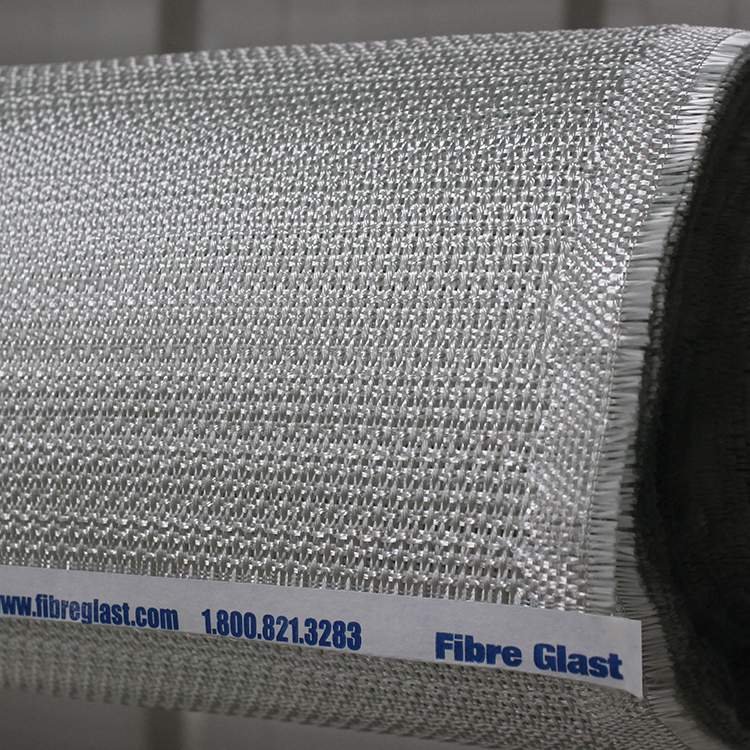
20 oz Tooling Fabric Overview
When you're looking to build thickness into a mold with limited time, this #254 tooling fabric is the right choice. It is typically placed at the heart of a mold to build bulk, strength, and dimensional stability.
This fabric offers very high strength characteristics as well as rapid build-up. Apply to molds as a back-up shell once the finer surfacing layers are in place.
Features
- Very high strength characteristics as well as rapid build-up.
- Ideal for building high-strength tooling.
- If requested, this fabric can be certified to meet the requirements of: AMS-3824 Style 7587 and ASTM D 4029-09 Style 7587.
Tips
- Fabrics need to be oriented so the fiber yarns run parallel to the expected loads.
- Lighter fabrics are generally added as a surface layer to prevent show-through of its more textured weave.
- Use with epoxy resin, polyester resin, or vinyl ester resin to produce composite parts of excellent strength, low weight, and great cosmetics.
- To create the highest quality molds, use with our #1110 Vinyl Ester Resin, or the System #2000 Epoxy.
Specifications
| Style |
7587 |
| Warp |
38-42 |
| Fill |
19-23 |
| Strength (Warp) |
>300 lbs/inch |
| Strength (Fill) |
>170 lbs/inch |
| Weave |
Mock Leno |
| Full Roll |
80 yards (typical) |
| Thickness |
0.027" - 0.035" |
| Color |
White |
| Weight |
19.3 - 20.2 oz/yard² |
Guarantee
Fibre Glast is committed to ensuring that every roll of fabric we handle is First Quality and manufactured to the highest standards, so that you can expect the same properties and handling characteristics every time you order.
Click here for more information on our First Quality Guarantee.
Why Choose 20 oz Tooling Fabric for Mold Building?
The #254 provides the heaviest woven fiberglass option in the Fibre Glast lineup, allowing fabricators to reach target mold thickness in fewer layers. Woven roving (#223) is another heavy reinforcement option, but the 20 oz Tooling Fabric is specifically designed for the demands of mold construction where dimensional stability is paramount.
A combination of #250 Chopped Strand Mat and #223 Woven Roving, along with the use of a lightweight surfacing fabric, will generally create a sturdy, durable mold. The #254 20 oz Tooling Fabric is also a popular option for mold building, offering very high strength characteristics.
When using polyester resin, alternating layers of chopped strand mat and woven or tooling fabric will increase dimensional stability and strengthen the finished mold. When fabricating molds with epoxy resin, the #245 10 oz Fiberglass Fabric and #254 20 oz Tooling Fabric are recommended, as chopped strand mat cannot be used with epoxies because the binder is not compatible.
What Are the Best Applications for 20 oz Tooling Fabric?
The Mock Leno weave provides a textured surface, so lighter fabrics are generally added as a surface layer to prevent show-through of this more textured weave. Always begin the mold surface with a lightweight surfacing fabric (2 oz #241 or 4 oz #262) to minimize print-through of the heavier patterned materials.
How Should 20 oz Tooling Fabric Be Used for Best Results?
For molds that will see higher service temperatures, use System #3300 High Temp Tooling Epoxy. Using a good tooling gelcoat, like #188 Orange Tooling Gel Coat, sprayed at the proper thickness, will aid greatly in achieving a Class "A" mold surface.
Available as cut-to-length yardage (#254, min 10 yd), 1-yard package (#254-F), 3-yard package (#254-A), and 5-yard package (#254-B).

 Learning Center
 Materials Calculator
 Industries Served
 Learning Center
 Materials Calculator